
“Sleep is the subtle ritual that allows the body to remember itself.”
There’s a quiet civility to sleep: a nightly surrender that looks like stillness but is, in fact, deeply active biological work. In a culture that often glorifies late nights and early mornings, sleep can feel negotiable — a luxury instead of a necessity. Science says otherwise.
Sleep is a foundational pillar of health, just like nutrition and movement. It regulates cognition, mood, immunity, metabolism, and cellular repair. Research consistently shows that most adults function best with around eight hours of sleep per night — enough time for the body and brain to complete multiple full restorative cycles.
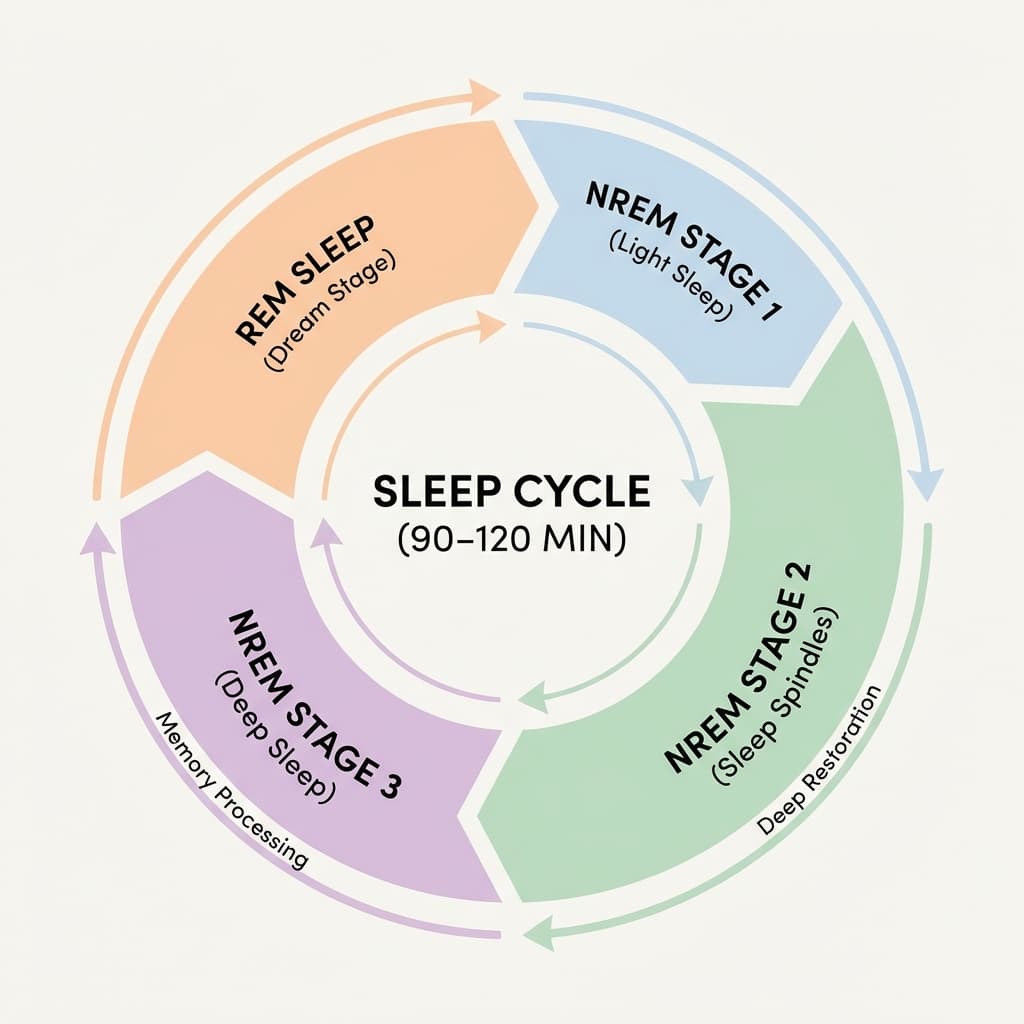
The Night’s Architecture: Stages and Cycles
Sleep isn’t a uniform state. It unfolds in structured phases that repeat throughout the night:
- NREM Stage 1Light sleep, the transition from wakefulness.
- NREM Stage 2Body temperature drops, heart rate slows.
- NREM Stage 3Deep, slow-wave sleep — the most physically restorative stage.
- REM SleepBrain activity increases, dreaming occurs, critical for memory integration.

Why 8 Hours? What the Hours Buy You
Brain Function and Memory
While you sleep, the brain organizes information gathered during the day. Short-term memories are stabilized into long-term storage, and unnecessary neural “noise” is pruned away. Sleep quite literally helps you wake up smarter.
Cellular Repair and Detox
Deep sleep is when the body shifts into maintenance mode. Growth hormone supports tissue repair, and the brain’s glymphatic system clears metabolic waste.

The Cost of Skimping on Sleep
Short-term sleep loss causes slower reaction times, brain fog, and irritability. Long-term insufficient sleep is associated with increased risk of heart disease, weakened immune function, and chronic inflammation. Your body keeps score, even when your schedule doesn’t.

Treating Sleep as a Ritual: Science-Backed Habits
- Evening Wind-Down: Dim lights an hour before bed and avoid screens.
- Optimize Environment: Keep the room cool, dark, and quiet.
- Protect Your Rhythm: Go to bed and wake up at the same time daily.
- Mind Consumption: Avoid caffeine late in the day and limit alcohol.
Protecting eight hours of sleep isn’t indulgent — it’s one of the most powerful health decisions you can make daily.
— GenkiDiary Wellness Team

About the Author
Dr. Michael Chen is a neuroscientist specializing in sleep research and cognitive optimization, with over 15 years of experience translating complex neuroscience into actionable insights.
View Full Profile